
Understand the impact of accumulated depreciation classification on financial statements, revealing asset value and profitability. When an asset is https://www.bookstime.com/ sold or retired, the accumulated depreciation account is debited to remove the accumulated depreciation for that asset. This brings the account back to zero, as it’s no longer relevant to the company.
Small Business Tax Forms
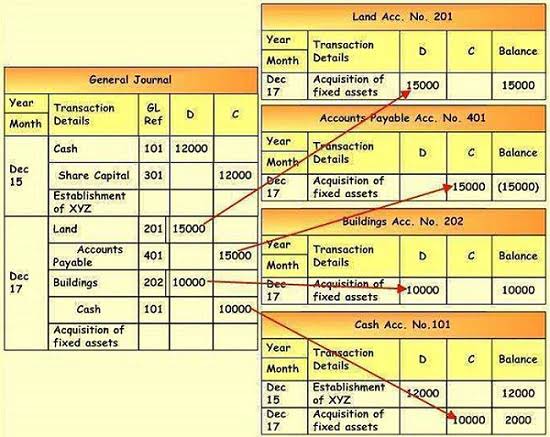
From an accounting standpoint, the depreciation expense is debited, while the accumulated depreciation is credited. The reinvestment ratio is calculated by dividing capital expenditures by depreciation. This ratio tells how much an organization is investing in fixed assets and if they are replacing depreciated assets.
- To record it, you need to debit the depreciation expense and credit the accumulated depreciation account.
- This balance keeps increasing but can never exceed the original cost of the asset.
- Various methods, such as straight line, declining balance, sum-of-the-years‘ digits, and units of production, are used to calculate depreciation.
- Depreciation expense is recorded on the income statement as an expense and reflects the amount of an asset’s value that has been consumed during the year.
- For example, office furniture is depreciated over seven years, automobiles get depreciated over five years, and commercial real estate is depreciated over 39 years.
- The total amount of depreciation applied to an asset up to a particular point is known as accumulated depreciation.
Accumulated depreciation on the cash flow statement
It is usually reported as a single line item, but a more detailed balance sheet might list several accumulated depreciation accounts, one for each fixed asset type. A typical presentation of accumulated depreciation appears in the following exhibit, which shows the fixed assets section of a balance sheet. That means it has a negative balance compared to its corresponding fixed asset account.
Top 8 Easy-to-Use SMB Accounting Software

Accumulated Depreciation is used to track the total amount of depreciation that has been recorded for an asset over its useful life. For example, a manufacturing company with machinery accumulated depreciation is what type of account purchased for $100,000 and $60,000 in accumulated depreciation shows a net book value of $40,000. This indicates the machinery has been largely used up and may need replacement soon.
Current assets vs. long term assets

Accurate financial reporting is a top priority for businesses, and depreciation accounting entries play a crucial role in https://connecthearts.site/2022/07/19/liabilities-vs-expenses-all-the-differences/ achieving this goal. For example, if a business recognizes $5,000 in depreciation for a vehicle in one year, the $5,000 is recorded as a debit to the expense account and a credit to the accumulated account. For reporting purposes, this account is displayed directly below the property, plant, and equipment (PP&E) line item on the Balance Sheet.